Loading page
How to Separate Household Scrap Before Selling in Ludhiana: 25-Item Recycling Checklist
Learn how to separate household scrap before selling it in Ludhiana. This practical checklist covers paper, cardboard, copper, iron, aluminium, batteries, appliances and e-waste, along with common mistakes that may reduce recycling value.
Back to blog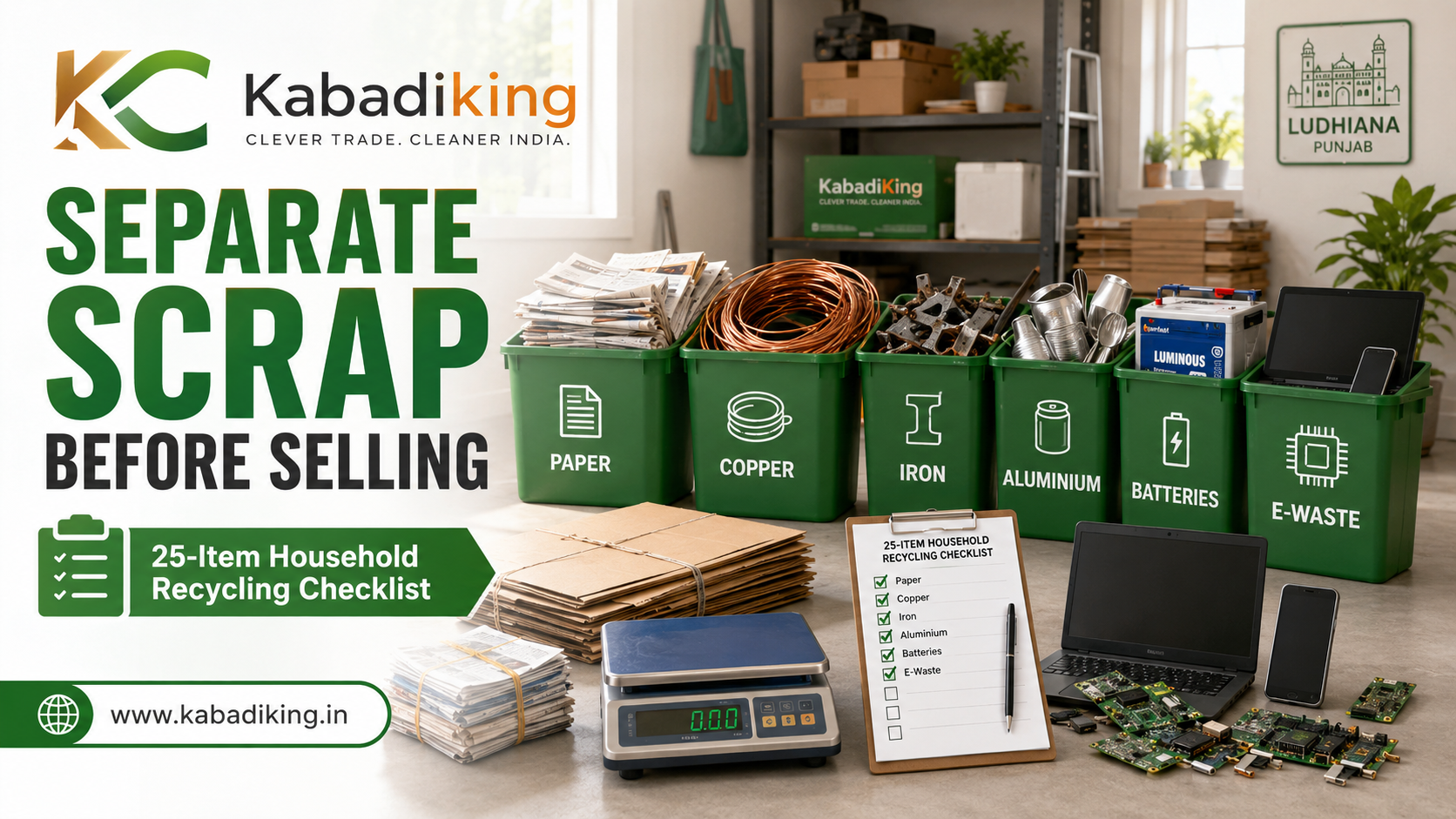
By amit rajhousehold scrap ludhianahow to separate scrapscrap segregation checklistrecyclable items at homepaper recycling ludhianacopper scrap ludhianairon scrap ludhianaaluminium scrap ludhianabattery recycling ludhianae-waste segregationlaptop recycling ludhianaac scrap ludhiana
Direct answer
Before selling household scrap in Ludhiana, divide it into separate categories: paper and cardboard, iron and steel, copper, aluminium, brass, plastic, batteries, appliances and electronic waste. Keep paper dry, remove food and household garbage, avoid burning electrical wires and do not dismantle batteries, air conditioners or refrigerators yourself. Clear separation makes weighing easier, reduces confusion and can help the buyer assess every material according to its correct category. To check collection availability with KabadiKing: 📞 +91-6280638378 📞 +91-9803454562 🌐 www.kabadiking.in
Detailed explanation
INTRODUCTION Many Ludhiana households store old newspapers, cardboard boxes, broken appliances, metal utensils, wires, batteries and outdated electronic devices for months. When everything is finally sold together, different materials are often mixed in the same bag or pile. Copper may be mixed with iron, wet cardboard may be mixed with dry paper, and batteries may be placed next to ordinary household waste. This makes the material harder to inspect, weigh and recycle. Proper scrap segregation does not require specialist equipment. A few labelled boxes, sacks or storage areas can make the process cleaner, safer and more transparent. This guide explains how to identify and separate 25 common household scrap items before requesting pickup in Ludhiana. WHY SHOULD HOUSEHOLD SCRAP BE SEPARATED? Different recyclable materials have different properties and recovery values. For example: • Copper is different from iron • Aluminium is different from steel • Dry cardboard is different from wet paper • Batteries require different handling from metal utensils • Electronic devices may contain personal data • Appliances may need inspection before valuation Separating scrap can help: • Make weighing easier • Reduce category confusion • Keep recyclable material cleaner • Prevent battery and e-waste hazards • Support more accurate assessment • Save time during collection • Improve responsible recycling THE SIMPLE FIVE-CONTAINER METHOD You do not need a large storage room to organize household scrap. Use five labelled containers or areas: CONTAINER 1: PAPER AND CARDBOARD Use this for newspapers, books, office paper and dry cartons. CONTAINER 2: METALS Keep iron, aluminium, brass and copper in separate smaller bags inside this section. CONTAINER 3: PLASTIC Store clean, dry and eligible recyclable plastic separately. CONTAINER 4: ELECTRONIC WASTE Use this for laptops, chargers, cables, routers, mobile phones and small electronics. CONTAINER 5: BATTERIES AND SPECIAL ITEMS Keep batteries and items that need careful handling separate from all other materials. Large appliances such as air conditioners, refrigerators and washing machines can be stored in their existing condition until inspected. 25-ITEM HOUSEHOLD SCRAP CHECKLIST NEWSPAPERS How to prepare: • Keep newspapers dry • Remove food waste • Remove plastic wrapping • Tie them into manageable bundles • Do not mix them with oily paper Why separation matters: Dry newspapers are easier to weigh and process than damp or contaminated paper. CARDBOARD BOXES How to prepare: • Flatten the boxes • Remove food residue • Remove foam and plastic where practical • Keep cartons dry • Tie large quantities together Do not include: • Wet cartons • Greasy food boxes • Heavily laminated packaging unless accepted BOOKS AND NOTEBOOKS How to prepare: • Remove plastic covers where practical • Keep books dry • Separate reusable books from damaged paper scrap • Remove personal documents containing sensitive information Consider donating books that are still usable before recycling them. OFFICE PAPER How to prepare: • Remove plastic folders • Remove large metal clips where practical • Shred confidential documents • Keep white paper separate from mixed packaging Businesses should follow their document-destruction policy before disposal. IRON UTENSILS Common examples: • Old pans • Iron trays • Damaged cookware • Metal stands • Heavy tools How to prepare: • Remove food residue • Keep iron separate from aluminium • Do not place sharp items loosely in thin bags OLD IRON FURNITURE Common examples: • Racks • Beds • Cupboards • Tables • Chairs • Metal shelves Before pickup: • Share photographs • Mention approximate size • Confirm whether dismantling is needed • Mention floor and lift access STEEL ITEMS Steel and iron may appear similar, but different grades can be assessed separately. Common examples: • Stainless-steel utensils • Steel containers • Kitchen racks • Sinks • Hardware Keep stainless steel separate from ordinary rusted iron where possible. COPPER ELECTRICAL WIRE How to prepare: • Coil wires safely • Keep copper wire separate from iron cable • Do not burn the insulation • Do not mix wire with household garbage Burning wire insulation can release harmful smoke and damage the recoverable material. COPPER PIPES Commonly found in: • Plumbing work • Old air-conditioning systems • Renovation material • Water-heating equipment Preparation: • Remove dirt where practical • Keep copper separate from brass fittings • Do not mix it with iron pipes BRASS TAPS AND FITTINGS Common examples: • Taps • Valves • Locks • Decorative fittings • Plumbing parts Brass may look similar to gold-coloured aluminium or coated metal. Keep uncertain pieces separate for inspection rather than guessing. ALUMINIUM UTENSILS Common examples: • Pots • Plates • Containers • Trays • Damaged kitchen items Preparation: • Clean food residue • Remove plastic handles where practical • Keep aluminium separate from stainless steel ALUMINIUM WINDOW FRAMES Before collection: • Remove loose glass safely • Do not leave sharp glass attached • Keep frame components together • Share photographs for larger quantities Never break glass without proper protection. BEVERAGE CANS Preparation: • Empty the cans • Rinse them • Allow them to dry • Crush only when safe • Keep aluminium cans separate from steel food tins PLASTIC BOTTLES Preparation: • Empty all liquids • Rinse the bottles • Allow them to dry • Remove food contamination • Keep chemical containers separate Not every plastic type is accepted through every pickup service. Confirm the category before collection. HARD PLASTIC HOUSEHOLD ITEMS Common examples: • Buckets • Plastic chairs • Storage boxes • Crates • Containers Separate reusable items from broken plastic. Some items may be better suited for reuse or donation. OLD INVERTER BATTERY Safety rules: • Keep the battery upright • Do not open it • Do not drain the liquid • Keep it away from fire and heat • Keep it away from children • Do not place it with ordinary metal scrap Share a clear photograph of the battery label and condition before pickup. VEHICLE BATTERY Preparation: • Keep terminals protected • Avoid tilting • Do not handle leaking batteries without appropriate safety support • Inform the collector if the casing is damaged A damaged battery requires special care and should not be transported casually. MOBILE PHONE Before selling: • Back up contacts and photographs • Sign out of accounts • Remove the SIM card • Remove memory cards • Disable device tracking • Perform a factory reset A working phone may have reuse value, while a damaged phone may be assessed as electronic waste. LAPTOP Before collection: • Back up important files • Sign out of all accounts • Remove personal data • Record the model • Include the charger if available • Mention missing parts • Do not remove internal components unless necessary Laptop valuation may depend on condition, components and reuse potential. DESKTOP CPU A desktop computer may contain: • Motherboard • Processor • RAM • Storage drive • Power supply • Cooling fan • Metal casing Before selling: • Remove or erase sensitive data • Do not mix loose circuit boards with iron scrap • Keep complete systems separate from dismantled parts COMPUTER MONITOR Keep monitors separate from general plastic and metal. Mention: • Screen size • LCD, LED or older display type • Working condition • Broken screen • Available stand and cables Broken displays require careful handling. CHARGERS AND CABLES Create se
Benefits
CLEANER STORAGE Separated materials are easier to store without creating a mixed waste pile. FASTER INSPECTION The collector can identify categories more efficiently. CLEARER WEIGHING Different materials can be weighed individually. SAFER BATTERY HANDLING Batteries remain separate from ordinary household materials. BETTER DATA PROTECTION Customers are reminded to erase phones, laptops and computers. REDUCED CONTAMINATION Paper, cardboard and metals remain more suitable for recycling. LESS CONFUSION Category-wise sorting can reduce disagreements during valuation. RESPONSIBLE RECYCLING Proper separation supports safer collection, reuse and material recovery.
Examples
EXAMPLE 1: KITCHEN CLEANOUT A family has aluminium utensils, stainless-steel containers and an iron rack. Instead of placing everything together, they create separate aluminium, steel and iron groups before pickup. EXAMPLE 2: HOME-OFFICE UPGRADE A customer has one laptop, a monitor, chargers, a router and old office paper. The electronic items are boxed separately, data is erased and paper is tied into a dry bundle. EXAMPLE 3: RENOVATION SCRAP A home renovation produces copper wire, aluminium frames, iron pipes and cardboard packaging. Each category is stored separately, while broken glass is removed and handled safely. EXAMPLE 4: OLD BATTERY AND AC A household has an inverter battery and a non-working split AC. The battery is kept upright, and the AC remains complete until an inspection is arranged. EXAMPLE 5: SOCIETY COLLECTION A residential society labels separate collection points for paper, metal, e-waste and batteries. Residents receive a checklist before the scheduled collection.
FAQ
Why should I separate household scrap before selling it?
Different materials have different recycling properties and values. Separation makes inspection and category-wise weighing easier and helps prevent batteries, electronics and contaminated waste from being mixed with ordinary recyclables.
Should copper and iron scrap be kept separately?
Yes. Copper and iron are different metal categories and should be stored and weighed separately. Brass, aluminium and stainless steel should also be separated where possible.
Can I mix newspapers and cardboard?
They can be stored in the same dry area, but separate bundles may make weighing and categorization easier. Keep both materials free from water, food and oil.
Should I remove insulation from copper wire?
Do not burn or use unsafe methods to remove wire insulation. Keep the wire in its existing condition and allow the buyer to identify its category.
How should an old inverter battery be stored?
Keep it upright, intact and away from children, fire, heat and water. Do not open, break or drain the battery.
What should I do before selling an old laptop?
Back up important files, sign out of accounts, remove memory cards and securely erase personal information. Include the charger and other accessories when available.
Should I dismantle an old AC before selling it?
No. Keep the indoor and outdoor units complete until they are inspected. Self-dismantling may create safety risks and change the item’s valuation.
Can wet cardboard be sold as scrap?
Wet or contaminated cardboard may have lower recycling value or may not be accepted. Keep all paper and cardboard in a dry, covered location.
How can I identify iron scrap at home?
A magnet can provide a basic indication. Iron and many types of steel attract a magnet, while copper, brass and aluminium normally do not. The test is not conclusive for every alloy or mixed item.
Can electronic waste be placed with ordinary metal scrap?
No. Phones, laptops, chargers, circuit boards and other electronic products should be stored separately because they may contain batteries, reusable components, data and materials needing different handling.
Does KabadiKing collect household scrap everywhere in Ludhiana?
Pickup depends on the locality, material category, quantity and current operational availability. Confirm your address and materials with KabadiKing before relying on a pickup date.
How can I contact KabadiKing for a Ludhiana pickup?
Contact KabadiKing using: 📞 +91-6280638378 📞 +91-9803454562 🌐 www.kabadiking.in
Summary
Separating household scrap before selling can make collection safer, cleaner and more transparent. Keep paper dry, divide metals into copper, brass, aluminium and iron, store batteries upright, erase personal data from electronics and avoid dismantling appliances yourself. Use the 25-item checklist before requesting pickup so that every category can be inspected and weighed appropriately. To check KabadiKing pickup availability in Ludhiana: 📞 +91-6280638378 📞 +91-9803454562 🌐 www.kabadiking.in SELL SCRAP. GET PAID. Clever Trade. Cleaner India.
Useful links
Related articles
How to Sell Scrap Online in Ludhiana: Complete 2026 Guide to Getting the Best Scrap Prices
A 2026 complete guide for Ludhiana households and businesses on how to sell scrap online at the best prices — covering AC, fridge, washing machine, generator, battery, copper, iron, e-waste, and all scrap materials. Includes live rates, competitor comparison, expert tips, environmental impact data, and step-by-step KabadiKing pickup process.
How to Sell Scrap in Ludhiana at the Best Price | KabadiKing GuideA complete guide for Ludhiana residents and businesses on how to sell scrap metal, paper, plastic, and e-waste at the best market rates using KabadiKing's free home pickup service.